 2025, Vol. 45


2. 中国医学科学院北京协和医学院放射医学研究所,天津 300192
2. Institute of Radiation Medicine, Chinese Academy of Medical Sciences & Peking Union Medical College, Tianjin 300192, China
放射性物质及放射线在军事、能源、介入医学等领域的广泛应用,对从业人员和公众的健康构成了严重威胁[1-4]。放射治疗是恶性肿瘤的重要治疗方式之一,据统计,60%~70%的肿瘤患者会接受放射治疗[5]。而放射治疗在杀死肿瘤细胞的同时也会引起照射野内正常组织细胞的损伤,这种对正常组织的损伤会限制放疗剂量,影响放疗患者的生活质量,严重时甚至会引起放疗患者死亡[6-7]。肠道是放射敏感器官之一,意外照射和腹盆腔肿瘤放射治疗均会引起肠道损伤,可累及小肠、结肠和直肠。放射对正常肠道组织产生的危害,表现为肠道菌群失调、肠道屏障破坏和炎症浸润等[8]。腹部照射对肠道菌群的影响表现为丰度和多样性的降低,有益菌数量的减少,特别是乳杆菌属(如鼠李糖乳杆菌、唾液乳杆菌以及粪乳杆菌)[9],而一些致病菌(如Escherichia fergusonii和Romboutsia timonensis)的丰度增加。
乳杆菌属具有维持和保护肠道健康的作用。例如,植物乳杆菌能够缓解小鼠的结肠炎,维持肠道屏障功能[10]。多项研究证实,乳杆菌属在辐射防护领域也具有显著的研究价值和应用潜力[11-13]。鉴于乳杆菌属的益生作用,乳杆菌属与其他易于基因操作的细菌(如大肠杆菌)相比,更具有作为基因工程菌株底盘菌的优势。然而,由于细胞壁较厚、构建效率较低,乳杆菌属作为基因工程底盘菌的应用较少[14]。本文将探讨乳杆菌属的益生作用,重点介绍辐射防治作用及其机制,以及影响乳杆菌属工程菌株构建效率的因素,旨在为以乳杆菌属作为底盘菌开发具有辐射防护和治疗作用的基因工程菌株提供启示。
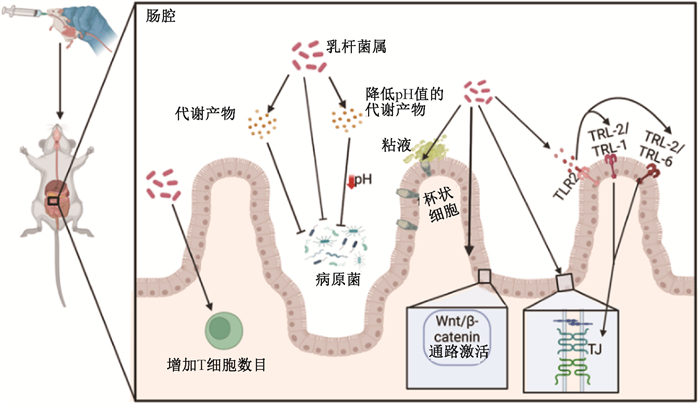
一、乳杆菌属的肠道益生作用乳杆菌属(Lactobacillus),隶属于厚壁菌门,是广泛存在于人类和动物体内的革兰氏阳性菌,与人类生活密切相关[15-20]。乳杆菌属是一类重要的益生菌,具有为宿主提供营养、促进免疫系统成熟、保护黏膜屏障以及防止外源性物质或病原体入侵等功能[21-22]。乳杆菌属对肠道健康的研究主要集中在肠道的生物屏障、化学屏障,上皮屏障和免疫屏障4个方面(图 1)。
|
图 1 乳杆菌属的肠道益生功能 Figure 1 Intestinal probiotic functions of Lactobacillus |
乳杆菌属在肠道生物屏障中可通过调节肠道菌群及其代谢产物发挥肠道益生作用,通过产生细菌素等活性代谢产物、降低pH、竞争粘附位点的方式抑制致病菌。陈晓华等[23-24]证明植物乳杆菌(L.plantarum)通过代谢抗菌物质(乳酸、过氧化氢、细菌素等)、分泌幽门螺杆菌竞争性黏附受体、刺激黏蛋白的表达和稳定胃黏膜等作用来抑制幽门螺杆菌定植。不仅如此,植物乳杆菌还能够抑制沙门氏菌[25]和空肠弯曲杆菌[26]的定植和侵袭。除植物乳杆菌外,其他乳杆菌属也具有抑制病原菌的作用。例如Sandra等[27]证明嗜酸乳杆菌通过产生有机酸,降低环境PH值抑制致病菌的生长;孙华迪等[28]证明嗜酸乳杆菌可以通过产生细胞素抑制大肠杆菌、金黄色葡萄球菌及沙门杆菌等致病菌感染;Atanassova等[29]证明副干酪乳杆菌亚种M3产生新蛋白活性物质,显示出抑菌和杀菌活性。总之乳杆菌属通过抑制肠道菌群中病原菌的比例,发挥保护肠道生物屏障的作用。在维持肠道化学屏障稳态方面,乳杆菌属通过促进肠上皮细胞(IECs)的黏液分泌发挥作用。例如Martín等[30]证明鼠李糖乳杆菌CNCM I-3690通过促进IECs黏液分泌改善小鼠肠炎模型的肠道病理状况。
乳杆菌属具有增强紧密连接,防止IECs凋亡以及维持肠隐窝稳态等功能保护肠道物理屏障[31-35]。Ding等[36]从肉鸡肠道筛选出一株具有肠道益生功能的罗伊氏乳杆菌,发现可通过激活肉鸡的无翼相关的整合成位点(Wnt)-β-连锁蛋白(β-catenin)信号通路促进肠道干细胞(ISCs)增殖,缓解脂多糖(LPS)诱导的肠道损伤。乳杆菌属可上调肠道紧密连接蛋白表达水平,例如Zheng等[34]证明鼠李糖乳杆菌CY12可显著上调肠道上皮细胞紧密连接蛋白相关基因的表达,从而改善肠道上皮屏障损伤;Alsadi等[37]证明嗜酸乳杆菌LA 1以Toll样受体(TLR)依赖的方式附着在肠上皮细胞膜表面,引起肠上皮细胞TLR2膜表达迅速增加,增强TLR2/TLR1和TLR2/TLR6异络合物依赖的肠道紧密连接功能,预防DSS诱导的肠道屏障通透性增加。肠上皮细胞作为一种高更新率细胞,其死亡与增殖的平衡对肠组织稳态的维持非常关键。Blanda等[38]发现加氏乳杆菌SF1183通过抑制TNF-α诱导的肠上皮细胞凋亡且促进紧密连接蛋白的表达保护肠道屏障。
乳杆菌属对肠道免疫屏障也有着重要作用[39-40]。鼠李糖乳杆菌HDB 1258抑制LPS诱导全身炎症小鼠的腹膜巨噬细胞的吞噬作用缓解肠道损伤[39]。Kim等[41]研究证明鼠李糖乳杆菌KBL 2290通过调节肠道炎症因子的表达水平以及增加T细胞的数量,缓解硫酸葡聚糖钠诱导的结肠炎。总之,乳杆菌属可有效维持肠道稳态以及修复肠道病理损伤,因此具有作为肠道损伤防护和治疗方式的潜力。
二、乳杆菌属的肠道辐射防护作用乳杆菌属在肠道辐射损伤的防护和治疗中发挥重要作用。相关机制及疗效涉及基础研究和临床研究两个层面。
1.基础研究:乳杆菌属可提高辐照小鼠的生存率,提示乳杆菌属在辐射防治中的关键作用[42]。Ki等[43]证明将嗜酸乳杆菌按照每日1次,每次1.0×10⁸ CFU的方案连续给大鼠灌胃10 d,在灌胃第7天后照射,使用6 MV光子束,以1.04 Gy/min的剂量率进行照射。研究结果发现,在肠道辐射剂量≤15 Gy时,嗜酸乳杆菌可缓解小肠黏膜损伤;当辐射剂量≥20 Gy时,嗜酸乳杆菌没有辐射防护作用。这表明嗜酸乳杆菌仅在大鼠接受低于特定剂量的辐射时才对肠黏膜具有辐射防护作用。然而,益生菌对辐射引起肠损伤的保护作用与辐射剂量之间的关系还需要更多动物在不同辐射剂量情况下的进一步研究来证实。
肠道辐射损伤的病理机制是肠道隐窝的破坏、自由基的过量产生、炎症通路的激活和细胞DNA损伤等。乳杆菌属可以通过保护肠道隐窝发挥辐射防护作用。Riehl等[44]研究证明鼠李糖乳杆菌ATCC 53103可以释放脂磷胆酸(LTA),LTA是TLR2的激活剂,LTA结合巨噬细胞上的TLR2诱导趋化因子配体12(CXCL12)的产生,CXCL12结合表达环氧合酶2(COX2)的间充质干细胞膜上的趋化因子受体4(CXCR4),诱导干细胞迁移到上皮干细胞附近区域,而表达COX2的间充质干细胞分泌前列腺素2(PEG2),PEG2对邻近上皮的干细胞具有抗凋亡的作用,从而维持辐射后肠道干细胞的稳态。Ciorba等[45]进一步探究鼠李糖乳杆菌的辐射防护作用,将鼠李糖乳杆菌ATCC 53103在照射前给小鼠灌胃3 d,发现鼠李糖乳杆菌的辐射防护作用依赖于髓样分化因子88(MYD88)、TLR2和COX2,而不依赖于肠道菌群组成的改变;鼠李糖乳杆菌并不改变COX2的表达水平,而是使表达COX2的间充质干细胞重新定位到隐窝中,保护肠道上皮免受辐射引起的肠道屏障损害。此外,Ciorba等[45]采用相同实验方案,通过灌胃给予小鼠干酪乳杆菌ATCC 4356和嗜酸乳杆菌ATCC 393处理,结果证实这两种菌株同样能够显著提升辐射后小鼠的肠道隐窝存活率。Sittipo等[46]发现,在辐射暴露后,肠道内源性嗜酸乳杆菌数量呈现动态变化:照射初期菌群丰度显著降低,但随着肠道组织修复过程的进行,其含量逐渐恢复至基线水平。这种时间依赖性的菌群动态变化特征提示,嗜酸乳杆菌可能参与调控放射性肠损伤的修复过程。为了进一步证明猜想,Ciorba等[45]使用灭活的嗜酸乳杆菌KCTC 3171处理辐射暴露的小鼠肠道类器官,结果显示该处理能够逆转辐射导致的富含亮氨酸重复序列的G蛋白偶联受体5(Lgr5)和黏蛋白(Muc2)表达水平下降,挽救受损的类器官出芽能力,并保护肠道干细胞分化和杯状细胞生长。
乳杆菌属可以通过下调炎症通路减轻放射性肠炎,通过从照射前3天开始给予鼠李糖乳杆菌ATCC 53103灌胃处理(1.0×10⁸ CFU/次,1次/d,持续至照射后3.5 d),可减轻照射引起的空肠组织DNA损伤,抑制炎性环磷酸鸟苷-腺苷酸合成酶(cGAS)-干扰素刺激因子(STING)信号通路,降低IFN-β基因表达,从而减少肠道炎症细胞浸润,缓解辐射性肠道损伤,最终提高小鼠存活率[11]。韩雅玲[12]研究表明,罗伊氏乳杆菌FN041能够通过调节辐射诱导的肠道菌群失调、降低辐射导致的LPS水平升高、抑制LPS-TLR2-核因子κB(NF-κB)信号通路激活来预防辐射所致的肠道黏膜屏障损伤,从而维持肠黏膜稳态,但其具体发挥辐射防护作用的关键肠道菌群或菌群代谢产物尚未明确。
辐射可诱发肠道氧化应激,导致肠道组织损伤及功能障碍。研究表明,特定乳杆菌菌株能够有效缓解辐射诱导的氧化应激反应。Zhang等[47]证实,罗伊氏乳杆菌DSM17938和罗伊氏乳杆菌ATCC PTA-6475通过增强机体抗氧化防御系统,显著降低辐射诱导的活性氧(ROS)水平,减轻氧化应激损伤,从而维持肠道内环境稳态。机制研究发现,这两种菌株通过激活腺苷酸活化蛋白激酶(AMPK)信号通路,有效减轻电离辐射对黑腹果蝇肠道上皮屏障的损伤,并延长其寿命。然而,关于AMPK信号通路在调控辐射损伤后氧化应激平衡及组织稳态重建中的具体分子机制,仍有待进一步阐明。研究表明,乳杆菌属可通过不同信号通路调控氧化应激反应。在高脂饮食小鼠模型中,植物乳杆菌FC255通过激活Kelch样ECH相关蛋白1(Keap1)-核转录因子E2相关因子2(Nrf2)-抗氧化反应元件(ARE)信号通路,显著改善高脂血症并降低脂质过氧化水平[48]。另一方面,鼠李糖乳杆菌通过蛋白激酶C(PKC)和丝裂原活化蛋白激酶(MAPK)依赖性机制,有效减轻过氧化氢诱导的Caco-2细胞紧密连接损伤和屏障功能障碍[49]。值得注意的是,目前尚未见乳杆菌属通过上述通路缓解辐射所致氧化应激的相关报道,这可能与疾病模型的差异有关。其是否能够调控辐射诱导的活性氧(ROS)升高,仍需进一步研究。
乳杆菌属可通过促进DNA损伤修复机制维持肠道上皮完整性[45, 50]。在照射前4周开始给予无菌小鼠植物乳杆菌ATCC 202195灌胃干预(1.0×10⁸ CFU/d),结果显示该处理可显著提升辐照后小鼠的存活率。机制研究进一步揭示,植物乳杆菌ATCC 202195通过激活法尼醇X受体(FXR)-成纤维细胞生长因子(FGF15)信号通路,促进DNA损伤修复,有效降低辐射诱导的小鼠肠上皮细胞死亡率[50]。综上所述,乳杆菌属通过促进隐窝干细胞存活、抑制炎症信号通路激活、增强抗氧化防御功能以及减少辐射诱导的肠上皮细胞凋亡等多靶点作用机制维持肠道屏障稳态,这些协同作用共同减轻辐射所致的肠道组织损伤(图 2)。

|
图 2 乳杆菌属对肠道的辐射防护作用及机制 Figure 2 Radioprotective effects and mechanisms of Lactobacillus on the intestine |
2. 临床研究:1998年,Salminen等[51]的研究纳入24例接受盆腔放疗(5 000 cGy)的宫颈癌和子宫内膜癌患者,试验组每日服用150 ml含嗜酸乳杆菌(≥2×10⁹ CFUs)的发酵乳制品。结果显示,与安慰剂组相比,嗜酸乳杆菌治疗可减轻患者腹泻程度,但该研究因样本量较小且实验设计不完善,其结果可靠性受到质疑。
2007年,Delia等[52]的研究纳入482例接受术后辅助放疗的结直肠癌患者(包括乙状结肠癌、直肠癌和结肠癌),采用双盲随机对照设计。试验组接受含乳杆菌、双歧杆菌和嗜热链球菌的VS3益生菌干预,效果评价采用世界卫生组织(WHO)分级标准。结果显示,试验组患者腹泻发生率显著低于安慰剂组(31.6% vs 51.6%,WHO分级标准),且3~4级严重腹泻发生率明显降低。
2010年,Chitapanarux等[53]进行了一项随机对照临床试验,研究对象为63例接受放射治疗的宫颈癌患者。采用双盲设计将患者随机分为两组,实验组服用含嗜酸乳杆菌(1×10⁹ CFU/粒)和双歧杆菌(1×109 CFU/粒)的复合益生菌胶囊(2次/d,早晚各1粒),从放疗前7天开始服用并持续整个放疗周期;对照组服用安慰剂,效果评价采用CTC分级标准。研究结果显示,相较于安慰剂组,试验组2级至3级腹泻程度明显减轻(45% vs 9%)。
2014年,Demers等[54]开展的一项随机对照临床研究纳入229例接受盆腔放疗的肿瘤患者,随机分为3组:安慰剂组、标准剂量组(Bifila治疗,含嗜酸乳杆菌LAC-361和长双歧杆菌BB-536,13×10⁸ CFUs/次,2次/d)和高剂量组(100×108 CFU/次,3次/d),效果评价采用WHO分级标准。结果显示,与安慰剂组相比,两个治疗组患者2~4级腹泻发生率(WHO分级标准)均显著降低。
2018年,Linn等[55]进行了一项随机、双盲、安慰剂对照实验,将54例接受放射治疗的宫颈癌患者随机分为试验组和安慰剂组。试验组在放疗期间服用含嗜酸乳杆菌LA-5和动物双歧杆菌BB-12的益生菌胶囊(17.5×10⁸ CFU/粒),3次/d。放射治疗期间,每日对患者的状态进行评估,放疗结束后3周内每周进行随访评估,效果评价采用CTCAE分级标准。评估结果显示,益生菌组腹泻发生率显著低于安慰剂组(53.8% vs 82.1%);此外,益生菌组中度和重度腹泻发生率显著减少。
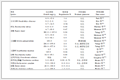
虽然上述研究结果显示出良好的应用前景,但乳杆菌属作为辐射防护剂和治疗剂的临床效果仍存在争议。多项临床试验数据显示,不同菌株在减轻放疗相关性腹泻方面存在显著差异,部分研究未能证实其确切疗效。例如2008年,Giralt等[56]纳入85例接受盆腔放疗(45~50 Gy)的宫颈癌和子宫内膜癌患者,随机分为试验组(干酪乳杆菌DN-114001干预)和安慰剂组,效果评价采用CTC分级标准。研究结果显示,虽然益生菌干预可改善粪便性状,但未能显著降低≥2级腹泻的发生率,但是由于其样本量较少,试验设计不完善,其结果遭受质疑。Urbancseka等[57]开展了一项随机双盲安慰剂对照试验,研究纳入206例接受盆腔放疗(总剂量50 Gy)的患者,包括卵巢癌、子宫癌、前列腺癌和直肠癌病例。试验组接受鼠李糖乳杆菌干预,结果显示两组间腹泻程度差异无统计学意义,但观察到试验组腹泻症状有改善趋势。综上所述,乳杆菌属在放射性肠损伤防护和治疗领域展现出潜在的应用价值。多数临床试验结果支持特定菌株(如鼠李糖乳杆菌ATCC 53103、嗜酸乳杆菌LA-5等)具有显著的辐射防护效果,能够降低放疗相关性腹泻的发生率和严重程度。尽管部分研究未观察到显著性差异,但是其实验样本量以及实验设计并不完善,且Urbancsek等[57]是肯定了鼠李糖乳杆菌在实验中的正向意义。未来需要通过大规模、多中心的随机对照试验,结合菌株特异性分析和标准化评估体系,进一步验证其临床疗效和安全性(表 1)。
三、乳杆菌属基因工程菌株在肠道辐射防护中的开发和应用基因工程改造乳杆菌属菌株用于肠道损伤防护的研究取得显著进展。基于乳杆菌属固有的益生特性,其作为基因工程底盘菌的应用潜力已得到证实。有研究以罗伊氏乳杆菌ATCC 23272作为底盘菌,通过将含有IL-22基因的质粒转入该菌株,开发了能够分泌白细胞介素-22(IL-22)的基因工程菌株,该基因工程菌株能够减轻辐射引起的肠道损伤,提高小鼠肠道潘氏细胞和杯状细胞数目,增加绒毛长度,并提高小鼠的存活率[58-59]。Watterlot等[60]以干酪乳杆菌BL23菌株为底盘菌株构建了产超氧化物歧化酶的基因工程菌株,将该菌株灌胃小鼠可减轻小鼠肠道的氧化应激以及炎症浸润。清酒乳杆菌中具有过氧化氢酶,且其多个菌株的全基因组测序已完成,因此作为底盘菌其具有较高的优先级。He等[61]提出将耐辐射球菌的PprI基因导入清酒乳杆菌构建重组菌株。PprI基因可调控超氧化物歧化酶、过氧化氢酶和过氧化物酶的活性表达。在电离辐射条件下,该重组菌株通过增强抗氧化酶活性清除辐射诱导产生的ROS,同时经树突状细胞介导的免疫调节作用,上调抗炎因子IL-10表达并下调促炎因子IL-6和TNF-α表达水平。重组PprI-清酒乳杆菌对肠道的辐射保护作用的实际应用潜力有待系统的实验研究证实。
|
表 1 乳杆菌属预防放射性肠损伤的相关临床研究 Table 1 Clinical studies on the prevention of RⅢ by Lactobacillus |
以上研究结果均表明,乳杆菌属作为基因工程菌株的底盘菌,具有较大的辐射防护和治疗的应用潜力。然而,相较于大肠杆菌、酵母菌等常见的基因工程底盘菌来说,乳杆菌属基因工程改造的报道较少,可能与其起步发展较晚和构建成功率低有关[14]。近年来,随着乳杆菌属各类表达调控元件的分离,相继发展了一批适用于乳杆菌属的克隆载体与表达载体[62-64]。然而,乳杆菌属是革兰氏阳性菌,具有厚且致密的刚性细胞壁,导致外源DNA导入受体细胞的效率极低,严重制约了乳杆菌属分子生物学的研究和基因工程技术的发展[14, 65-66]。因此,提高乳杆菌属的遗传转化效率是目前急需解决的问题。
四、基于乳杆菌属底盘构建基因工程菌株的影响因素基于乳杆菌属底盘菌构建基因工程菌株的影响因素有:可应用的载体有限,外源DNA导入效率低,以及基因工程菌株普遍存在的应用限制等。
据报道常用于构建乳杆菌属基因工程菌株的载体有pMG36e、pLEB590和pSIP411等[67-71]。pMG36e是目前应用较多的一个组成型表达载体,代伟丽等[68]将带有nisI和绿色荧光蛋白基因的乳酸菌表达载体pMG36e-nisI-gfp转化至植物乳杆菌MA2,验证该质粒在宿主具有良好的稳定性。pLEB590是一种食品级质粒,该食品级质粒完全由乳球菌DNA构建而成。Takala和Saris[67]将pepl基因克隆到pLEB590质粒中,并将构建好的质粒转入植物乳杆菌中,pepl基因表达水平高于宿主菌株200倍。Karlsk s等[69]证明,pSIP411载体可以在植物乳杆菌、鼠李糖乳杆菌、嗜酸乳杆菌、短乳杆菌等复制。用于乳杆菌属基因工程菌株的载体较少,而对乳球菌进行基因工程改造的载体较多,如pSH91、MG1363及pUC18等[72-73]。但是这些载体能否用于乳杆菌属的基因工程改造仍未可知,需要进行大量实验验证。所以,可应用载体较少是乳杆菌属作为底盘菌构建基因工程菌株的影响因素之一。
基于乳杆菌属底盘构建基因工程菌株的影响因素主要是外源DNA导入效率低。乳杆菌属外源DNA转化的方法主要是电转化法。电转化法具有操作简便、耗时短且菌株适应性广等特点[14]。该方法的原理是将细胞放在电场中,通过施加一定大小的电压,使细胞膜电位达到一定阈值形成孔洞,使DNA分子进入细胞内[74]。但针对乳杆菌属的电转化方法尚不完善,存在转化效率低、重复性差等缺点[14]。影响电转化效率的因素较多,主要有电转化预处理培养基的选择、电转化过程、乳杆菌属的生长状态和复苏过程等因素。电转化预处理培养基的选择是影响因素之一。预处理培养基一般包含甘氨酸、MgCl2、水、醋酸锂或者二硫苏糖醇(DTT)中的一种或者两种及以上,可以根据特定菌株的细胞壁特点,选择不同的预处理培养基。电转化过程包括电击条件和质粒浓度的选择。常用的电场强度为7.5 ~12.5 kV/cm,电阻为200或者400 Ω[62, 64],质粒浓度为20~250 ng/μl[75-76],可以在上述范围内进行梯度优化,选择最适条件。乳杆菌属的生长状态的选择也影响后续最大电转化效率,目前尚无明确的时间选择节点,研究者可以根据菌株特点进行选择。乳杆菌属电击后需要在非抗性培养基复苏,有研究证明菌液电击之后,在复苏培养基中培养一段时间,与直接涂布抗性培养基平板相比,电转化效率提高了60~80倍[77]。不同的乳杆菌属,其电转化过程条件各不相同,甚至同一乳杆菌种的不同菌株的最适电击条件差异也可能较大[64]。因此研究者需根据自己选择的乳杆菌株来调整得到最优的电转化条件。
基于乳杆菌属作为底盘菌构建基因工程菌株除了以上限制因素之外,还存在基因工程菌株普遍存在的应用局限性:如何确保环境释放的安全性,这是目前几乎所有基因工程菌株转化应用的现实难题[78]。基因工程菌株应用需考虑其释放后的环境行为,包括持久性环境扩散[79]、对本土微生物群落的冲击[80]、水平基因转移[81]以及对生态和人类健康的影响[82]。为了使乳杆菌属能够较为顺利的进行临床转化,在未来的工作中需要对乳杆菌的遗传进行优化设计。优化乳杆菌遗传设计以提高控制和生物安全性从而降低环境风险的方法包括构建合成营养缺陷型基因工程菌株[83]、应用安全开关[84]、应用遗传元件实现生存时间控制[85]或释放后跟踪[86]、阻止水平基因转移[87]等,来增加基于乳杆菌属作为底盘菌构建的基因工程菌株的临床转化可能性。
五、小结和展望放射性肠损伤是意外受照人员或盆腹腔恶性肿瘤患者放疗而引起的一种肠道不良事件,不仅影响生活质量和肿瘤治疗效果,严重时甚至会引起死亡[88-89]。乳杆菌属广泛应用在医疗、工业和食品行业中,已有大量的研究证明乳杆菌属的益生作用[15-17]。乳杆菌属特定菌株对辐射诱导的肠道损伤展现出显著的防护和治疗效果。实验数据显示,经乳杆菌属干预的辐射动物模型,其存活率显著提升,同时伴有肠道组织病理学改善和屏障功能恢复[42, 45, 90],并且大多数临床研究肯定了乳杆菌属对放疗病人肠道辐射防护和治疗的潜在价值。因此,在构建用于防护和治疗辐射诱导肠道损伤的基因工程菌株时,乳杆菌属作为底盘菌,相较于大肠杆菌、酵母菌等无明显益生作用的底盘菌,潜力和收益将更大。但是由于作为革兰氏阳性的乳杆菌属细菌细胞壁较厚,外源DNA通过电转化进入细胞的成功率低,严重限制了乳杆菌属作为合成生物学中底盘菌的应用[14, 65-66]。本文总结了乳杆菌属对肠道的益生作用,重点探究了乳杆菌属细菌的辐射防护作用以及机制。此外,本文阐述了基于乳杆菌属底盘菌构建基因工程菌株的影响因素,旨在为构建条件的选择以及构建方法的进一步优化提供策略,从而促进基因工程改造乳杆菌属在辐射防护和治疗方面的进一步探究以及应用。
利益冲突 全体作者无利益冲突,未接受任何不正当职务及财政获益,并对本文的独立性和科学性予以保证
作者贡献声明 贾笑笑、刘颖双负责文献检索及论文起草;纪凯华、张曼曼负责论文构思及审阅;李建国、刘强负责审核、校对
| [1] |
Park HY, Yu JH. X-ray radiation-induced intestinal barrier dysfunction in human epithelial Caco-2 cell monolayers[J]. Ecotoxicol Environ Saf, 2023, 264: 115404. DOI:10.1016/j.ecoenv.2023.115404 |
| [2] |
Kinase S, Hande V, Orita M, et al. Comparison of quality of life between elderly and non-elderly adult residents in Okuma town, Japan, in a post-disaster setting[J]. Plos One, 2023, 18(2): e0281678. DOI:10.1371/journal.pone.0281678 |
| [3] |
王井淼, 秦文, 谢文亮. 2017—2023年天津市某综合性三甲医院放射工作人员职业性外照射个人剂量监测结果分析[J]. 国际放射医学核医学杂志, 2024, 48(8): 504-508. Wang JM, Qin W, Xie WL. Analysis of individual dose monitoring results of occupational external exposure for radiation workers in a certain comprehensive tertiary hospital in Tianjin from 2017 to 2023[J]. Int J Radiat Med Nucl Med, 2024, 48(8): 504-508. DOI:10.3760/cma.j.cn121381-202406014-00453 |
| [4] |
王鹏, 颜学先, 陆克义, 等. 基于国际标准下我国临床核医学辐射防护问题的思考[J]. 国际放射医学核医学杂志, 2024, 48(2): 69-73. Wang P, Yan XX, Lu KY, et al. Reflections on radiation protection of clinical nuclear medicine in China based on international standards[J]. Int J Radiat Med Nucl Med, 2024, 48(2): 69-73. DOI:10.3760/cma.j.cn121381-202308018-00388 |
| [5] |
陈大卫, 尚士洁, 于金明. 重新认识放射治疗在肿瘤综合治疗中的作用[J]. 中国科学基金, 2025, 39(1): 34-49. Chen DW, Shang SJ, Yu JM. Re-evaluating the role of radiotherapy in comprehensive cancer treatmen[J]. Bull Natl Nat Sci Found China, 2025, 39(1): 34-49. DOI:10.16262/j.cnki.1000-8217.20250226.005 |
| [6] |
Hanania AN, Mainwaring W, Ghebre YT, et al. Radiation-induced lung injury: assessment and management[J]. Chest, 2019, 156(1): 150-162. DOI:10.1016/j.chest.2019.03.033 |
| [7] |
Kordahi MC, Chassaing B. The Intestinal microbiota: our best frenemy in radiation-induced damages?[J]. Cell Host Microbe, 2021, 29(1): 7-9. DOI:10.1016/j.chom.2020.12.013 |
| [8] |
朱长真, 李元新. 放射性肠炎与肠道微生态研究进展[J]. 中国医学科学院学报, 2020, 42(3): 405-409. Zhu CZ, Li YX. Radioactive enteritis and gut mcroecology[J]. Acta Acad Med Sin, 2020, 42(3): 405-409. DOI:10.3881/j.issn.1000-503X.11448 |
| [9] |
Thomsen M, Vitetta L. Adjunctive treatments for the prevention of chemotherapy- and radiotherapy-induced mucositis[J]. Integr Cancer Ther, 2018, 17(4): 1027-1047. DOI:10.1177/1534735418794885 |
| [10] |
Chen XP, Tian HZ, Ren ZG. Mouse β-defensin 14-expressing Lactiplantibacillus plantarum attenuates acute colitis in mice[J] 2022, 43(17): 1-11. DOI: 10.7506/spkx1002-6630-20220509-110.
|
| [11] |
Zhang LL, Xu JY, Xing Y, et al. Lactobacillus rhamnosus GG alleviates radiation-induced intestinal injury by modulating intestinal immunity and remodeling gut microbiota[J]. Microbiol Res, 2024, 286: 127821. DOI:10.1016/j.micres.2024.127821 |
| [12] |
韩雅玲. 罗伊氏乳杆菌FN041对小鼠急性放射性肠损伤的改善作用及机制研究[D]. 青岛: 青岛大学, 2023. Han YL. Study on the ameliorative effects and mechanisms of Lactobacillus reuteri FN041 on acute radiation-induced intestinal injury in mice[D]. Qingdao: Qingdao University, 2023. |
| [13] |
Zhao J, Pan HJ, Qu L, et al. Lactobacillus rhamnosus GG ameliorates radiation-induced lung fibrosis via lncRNASNHG17/PTBP1/NICD axis modulation[J]. Biol Direct, 2023, 18(1): 2. DOI:10.1186/s13062-023-00357-x |
| [14] |
Zuo FL, Chen SW, Marcotte H. Engineer probiotic bifidobacteria for food and biomedical applications-current status and future prospective[J]. Biotechnol Adv, 2020, 45: 107654. DOI:10.1016/j.biotechadv.2020.107654 |
| [15] |
Kumar M, Kala A, Chaudhary LC, et al. Microencapsulated and lyophilized lactobacillus acidophilus improved gut health and immune status of preruminant calves[J]. Probiotics Antimicrob Proteins, 2021, 14(3): 523-534. DOI:10.1007/s12602-021-09821-4 |
| [16] |
Zhou MZ, Zheng X, Zhu HJ, et al. Effect of Lactobacillus plantarum enriched with organic/inorganic selenium on the quality and microbial communities of fermented pickles[J]. Food Chem, 2021, 365: 130495. DOI:10.1016/j.foodchem.2021.130495 |
| [17] |
Zhao XX, Li SL, Liu YH, et al. Production of fermented spicy rabbit meat using Lactobacillus paracasei[J]. Bioprocess Biosyst Eng, 2021, 45(1): 87-95. DOI:10.1007/s00449-021-02642-3 |
| [18] |
Zhang SS, Xu ZS, Qin LH, et al. Low-sugar yogurt making by the co-cultivation of Lactobacillus plantarum WCFS1 with yogurt starter cultures[J]. J Dairy Sci, 2020, 103(4): 3045-3054. DOI:10.3168/jds.2019-17347 |
| [19] |
Han MZ, Zhang MN, Wang XW, et al. Cloudy apple juice fermented by lactobacillus prevents obesity via modulating gut microbiota and protecting intestinal tract health[J]. Nutrients, 2021, 13(3): 971. DOI:10.3390/nu13030971 |
| [20] |
Patrignani F, Siroli L, Parolin L, et al. Use of Lactobacillus crispatus to produce a probiotic cheese as potential gender food for preventing gynaecological infections[J]. PLoS One, 2019, 14(1): e0208906. DOI:10.1371/journal.pone.0208906 |
| [21] |
Rao RK, Samak G. Protection and restitution of gut barrier by probiotics: nutritional and clinical implications[J]. Curr Nutr Food Sci, 2013, 9(2): 99-107. DOI:10.2174/1573401311309020004 |
| [22] |
Lightfoot YL, Selle K, Yang T, et al. SIGNR3-dependent immune regulation by Lactobacillus acidophilus surface layer protein a in colitis[J]. EMBO J, 2015, 34(7): 881-895. DOI:10.15252/embj.201490296 |
| [23] |
陈晓华, 田丰伟, 刘小鸣, 等. 防治幽门螺杆菌感染的益生菌研究进展[J]. 食品工业科技, 2011, 32(6): 483-487. Chen XH, Tian FW, Liu XM, et al. Research progress on probiotics for the prevention and treatment of Helicobacter pylori infection[J]. Sci Technol Food Ind, 2011, 32(6): 483-487. DOI:10.13386/j.issn1002-0306.2011.06.029 |
| [24] |
陈晓华, 肖苇苇, 田丰伟, 等. 具有拮抗幽门螺杆菌作用的植物乳杆菌特性研究[J]. 食品工业科技, 2012, 33(2): 195-198. Chen XH, Xiao WW, Tian FW, et al. Characteristics of Lactobacillus plantarum with antagonistic activity against Helicobacter pylori[J]. Sci Technol Food Ind, 2012, 33(2): 195-198. DOI:10.13386/j.issn1002-0306.2012.02.066 |
| [25] |
Liu JS, Hu D, Chen YQ, et al. Strain-specific properties of Lactobacillus plantarum for prevention of Salmonella infection[J]. Food Funct, 2018, 9(7): 3673-3682. DOI:10.1039/c8fo00365c |
| [26] |
王刚, 贺禹丰, 陈晓华, 等. 乳酸菌生物学特性与其拮抗空肠弯曲杆菌在小鼠肠道定植能力的分析[J]. 食品与发酵工业, 2017, 43(8): 73-80. Wang G, He YF, Chen XH, et al. Analysis on biological characteristics of lactic acid bacteria and its antagonistic activity against campylobacter jejuni colonization in mice[J]. Food Ferment Ind, 2017, 43(8): 73-80. DOI:10.13995/j.cnki.11-1802/ts.014093 |
| [27] |
Sandra TS, Janine B, Adele C, et al. In vitro evaluation of the antimicrobial activity of a range of probiotics against pathogens: evidence for the effects of organic acids[J]. Anaerobe, 2012, 18(5): 530-538. DOI:10.1016/j.anaerobe.2012.08.004 |
| [28] |
孙华迪, 蔡丽丽, 陈晓静, 等. 具有广谱抑菌特性的嗜酸乳杆菌细菌素活性研究[J]. 河南工业大学学报(自然科学版), 2020, 41(4): 84-89. Sun HD, Cai LL, Chen XJ, et al. Study on the activity of bacteriocin from Lactobacillus acidophilus with broad-spectrum antibacterial properties[J]. J. Henan Univ Technol.(Nat Sci Ed), 2020, 41(4): 84-89. DOI:10.16433/j.1673-2383.2020.04.013 |
| [29] |
Atanassova M, Choiset Y, Dalgalarrondo M, et al. Isolation and partial biochemical characterization of a proteinaceous anti-bacteria and anti-yeast compound produced by Lactobacillus paracasei subsp. paracasei strain M3[J]. Int J Food Microbiol, 2003, 87(1-2): 63-73. DOI: 10.1016/s0168-1605(03)00054-0.
|
| [30] |
Martín R, Chamignon C, Mhedbihajri N, et al. The potential probiotic Lactobacillus rhamnosus CNCM I-3690 strain protects the intestinal barrier by stimulating both mucus production and cytoprotective response[J]. Sci Rep, 2019, 9(1): 5398. DOI:10.1038/s41598-019-41738-5 |
| [31] |
Jones RM, Luo L, Ardita CS, et al. Symbiotic lactobacilli stimulate gut epithelial proliferation via Nox-mediated generation of reactive oxygen species[J]. EMBO J, 2013, 32(23): 3017-3028. DOI:10.1038/emboj.2013.224 |
| [32] |
Campana R, Federici S, Ciandrini E, et al. Antagonistic activity of Lactobacillus acidophilus ATCC 4356 on the growth and adhesion/invasion characteristics of human campylobacter jejuni[J]. Curr Microbiol, 2012, 64(4): 371-378. DOI:10.1007/s00284-012-0080-0 |
| [33] |
Jin WY, Guo JX, Tang R, et al. In vivo detection of endogenous toxic phenolic compounds of intestine[J]. J Hazard Mater, 2024, 478: 135526. DOI:10.1016/j.jhazmat.2024.135526 |
| [34] |
Zheng JS, Ahmad A, Yang YY, et al. Lactobacillus rhamnosus CY12 enhances intestinal barrier function by regulating tight junction protein expression, oxidative stress, and inflammation response in lipopolysaccharide-induced Caco-2 cells[J]. Int J Mol Sci, 2022, 23(19): 11162. DOI:10.3390/ijms231911162 |
| [35] |
黄龙昌, 王鹏, 王新颖. 乳杆菌与肠道机械屏障的研究进展[J]. 肠外与肠内营养, 2023, 30(5): 315-320. Huang LC, Wang P, Wang XY. Research progress on Lactobacillus and intestinal mechanical barrier[J]. J Parenter Enter Nutr Pen, 2023, 30(5): 315-320. DOI:10.16151/j.1007-810x.2023.05.011 |
| [36] |
Ding XQ, Tang RZ, Zhao JY, et al. Lactobacillus reuteri alleviates LPS-induced intestinal mucosal damage by stimulating the expansion of intestinal stem cells via activation of the Wnt/β-catenin signaling pathway in broilers[J]. Poult Sci, 2024, 103(10): 104072. DOI:10.1016/j.psj.2024.104072 |
| [37] |
Alsadi R, Nighot P, Nighot M, et al. Lactobacillus acidophilus Induces a strain-specific and toll-like receptor 2-dependent enhancement of intestinal epithelial tight junction barrier and protection against intestinal inflammation[J]. Am J Pathol, 2021, 191(5): 872-884. DOI:10.1016/j.ajpath.2021.02.003 |
| [38] |
Blanda DL, Vittoria A, Anella S, et al. Modulation of intestinal epithelial cell proliferation and apoptosis by Lactobacillus gasseri SF1183[J]. Sci Rep, 2022, 12(1): 20248. DOI:10.1038/s41598-022-24483-0 |
| [39] |
Han SK, Shin YJ, Lee DY, et al. Lactobacillus rhamnosus HDB1258 modulates gut microbiota-mediated immune response in mice with or without lipopolysaccharide-induced systemic inflammation[J]. BMC Microbiol, 2021, 21(1): 146. DOI:10.1186/s12866-021-02192-4 |
| [40] |
Bereswill S, Ekmekciu I, Escher U, et al. Lactobacillus johnsonii ameliorates intestinal, extra-intestinal and systemic pro-inflammatory immune responses following murine Campylobacter jejuni infection[J]. Sci Rep, 2017, 7(1): 2138. DOI:10.1038/s41598-017-02436-2 |
| [41] |
Kim WK, Min SG, Kwon H, et al. Lactobacillus rhamnosus KBL2290 ameliorates gut inflammation in a mouse model of dextran sulfate sodium-induced colitis[J]. J Microbiol, 2023, 61(7): 673-682. DOI:10.1007/s12275-023-00061-5 |
| [42] |
Guo H, Chou WC, Lai Y, et al. Multi-omics analyses of radiation survivors identify radioprotective microbes and metabolites[J]. Science, 2020, 370(6516): eaay9097. DOI:10.1126/science.aay9097 |
| [43] |
Ki Y, Kim W, Cho H, et al. The effect of probiotics for preventing radiation-induced morphological changes in intestinal mucosa of rats[J]. J Korean Med Sci, 2014, 29(10): 1372-1378. DOI:10.3346/jkms.2014.29.10.1372 |
| [44] |
Riehl TE, Alvarado D, Ee X, et al. Lactobacillus rhamnosus GG protects the intestinal epithelium from radiation injury through release of lipoteichoic acid, macrophage activation and the migration of mesenchymal stem cells[J]. Gut, 2019, 68(6): 1003-1013. DOI:10.1136/gutjnl-2018-316226 |
| [45] |
Ciorba MA, Riehl TE, Rao MS, et al. Lactobacillus probiotic protects intestinal epithelium from radiation injury in a TLR-2/cyclo-oxygenase-2-dependent manner[J]. Gut, 2012, 61(6): 829-838. DOI:10.1136/gutjnl-2011-300367 |
| [46] |
Sittipo P, Pham HQ, Park CE, et al. Irradiation-induced intestinal damage is recovered by the indigenous gut Bacteria Lactobacillus acidophilus[J]. Front Cell Infect Microbiol, 2020, 10: 415. DOI:10.3389/fcimb.2020.00415 |
| [47] |
Zhang SL, Wang ZY, Jiang J, et al. Lactobacillus reuteri's multifaceted role in mitigating ionizing radiation-induced injury in Drosophila melanogaster[J]. Food Funct, 2024, 15(7): 3522-3538. DOI:10.1039/d3fo05422e |
| [48] |
Gao DW, Gao ZR, Zhu GH. Antioxidant effects of Lactobacillus plantarum via activation of transcription factor Nrf2[J]. Food Funct, 2013, 4(6): 982-989. DOI:10.1039/c3fo30316k |
| [49] |
Seth A, Yan F, Polk DB, et al. Probiotics ameliorate the hydrogen peroxide-induced epithelial barrier disruption by a PKC and MAP kinase-dependent mechanism[J]. Am J Physiol Gastrointest Liver Physiol, 2008, 294(4): 1060-1069. DOI:10.1152/ajpgi.00202.2007 |
| [50] |
Jian YP, Yang G, Zhang LH, et al. Lactobacillus plantarum alleviates irradiation-induced intestinal injury by activation of FXR-FGF15 signaling in intestinal epithelia[J]. J Cell Physiol, 2021, 237(3): 1845-1856. DOI:10.1002/jcp.30651 |
| [51] |
Salminen E, Elomaa I, Minkkinen J, et al. Preservation of intestinal integrity during radiotherapy using live Lactobacillus acidophilus cultures[J]. Clin Radiol, 1988, 39(4): 435-437. DOI:10.1016/s0009-9260(88)80296-4 |
| [52] |
Delia P, Sansotta Q, Valentino D, et al. Use of probiotics for prevention of radiation-induced diarrhea[J]. World J Gastroenterol, 2009, 110(2): 912-915. DOI:10.3748/wjg.v13.i6.912 |
| [53] |
Chitapanarux I, Chitapanarux T, Traisathit P, et al. Randomized controlled trial of live Lactobacillus acidophilus plus bifidobacterium bifidum in prophylaxis of diarrhea during radiotherapy in cervical cancer patients[J]. Radiat Oncol, 2010, 5: 31. DOI:10.1186/1748-717x-5-31 |
| [54] |
Demers M, Dagnault A, Desjarfins J. A randomized double-blind controlled trial: impact of probiotics on diarrhea in patients treated with pelvic radiation[J]. Clin Nutr, 2014, 33(5): 761-767. DOI:10.1016/j.clnu.2013.10.015 |
| [55] |
Linn YH, Thu KK, Win NHH. Effect of probiotics for the prevention of acute radiation-induced diarrhoea among cervical cancer patients: a randomized double-blind placebo-controlled study[J]. Probiot Antimic Proteins, 2018, 11(2): 638-647. DOI:10.1007/s12602-018-9408-9 |
| [56] |
Giralt J, Regadera JP, Verges R, et al. Effects of probiotic Lactobacillus casei DN-114 001 in prevention of radiation-induced diarrhea: results from multicenter, randomized, placebo-controlled nutritional trial[J]. Int J Radiat Oncol Biol Phys, 2008, 71(4): 1213-1219. DOI:10.1016/j.ijrobp.2007.11.009 |
| [57] |
Urbancseka H, Kazar T, Mezes I, et al. Results of a double-blind, randomized study to evaluate the efficacy and safety of Antibiophilus in patients with radiation-induced diarrhoea[J]. Eur J Gastroenterol Hepatol, 2001, 13(4): 391-396. DOI:10.1097/00042737-200104000-00015 |
| [58] |
Espinal A, Epperly MW, Mukherjee A, et al. Intestinal radiation protection and mitigation by second-generation probiotic Lactobacillus-reuteri engineered to deliver interleukin-22[J]. Int J Mol Sci, 2022, 23(10): 5616. DOI:10.3390/ijms23105616 |
| [59] |
Zhang XC, Fisher R, Hou W, et al. Second-generation probiotics producing IL-22 increase survival of mice after total body irradiation[J]. In Vivo, 2019, 34(1): 39-50. DOI:10.21873/invivo.11743 |
| [60] |
Watterlot L, Rochat T, Sokol H, et al. Intragastric administration of a superoxide dismutase-producing recombinant Lactobacillus casei BL23 strain attenuates DSS colitis in mice[J]. Int J Food Microbiol, 2010, 144(1): 35-41. DOI:10.1016/j.ijfoodmicro.2010.03.037 |
| [61] |
He JY, Wang WZ, Qi HZ, et al. Use of recombinant Lactobacillus sakei for the prevention and treatment of radiation-induced enteritis[J]. Med Hypothes, 2018, 119: 37-40. DOI:10.1016/j.mehy.2018.07.024 |
| [62] |
Fristot E, Bessede T, Rufino MC, et al. An optimized electrotransformation protocol for Lactobacillus jensenii[J]. PLoS One, 2023, 18(2): e0280935. DOI:10.1371/journal.pone.0280935 |
| [63] |
Heng NC, Jenkinsan HF, Tannock GW. Cloning and expression of an endo-1, 3-1, 4-β-glucanase gene from bacillus macerans in Lactobacillus reuteri[J]. Am Soc Microbiol, 1997, 63(8): 3336-3340. DOI:10.1128/aem.63.8.3336-3340.1997 |
| [64] |
Welker DL, Hughes JE, Steele JL, et al. High efficiency electrotransformation of Lactobacillus casei[J]. FEMS Microbiol Lett, 2014, 362(2): 1-6. DOI:10.1093/femsle/fnu033 |
| [65] |
Prete R, Long SL, Joyce SA, et al. Genotypic and phenotypic characterization of food-associated Lactobacillus plantarum isolates for potential probiotic activities[J]. FEMS Microbiol Lett, 2020, 367(10): fnaa076. DOI:10.1093/femsle/fnaa076 |
| [66] |
杨子萱. 质粒pMG36e电转化保加利亚乳杆菌、鼠李糖乳杆菌和干酪乳杆菌的研究[D]. 河北: 河北农业大学, 2014. Yang ZX. Study on electrotransformation of plasmid pMG36e into Lactobacillus bulgaricus, Lactobacillus rhamnosus and Lactobacillus casei[D]. Hebei: Hebei Agricultural University, 2014. |
| [67] |
Takala TK, Saris PEJ. A food-grade cloning vector for lactic acid bacteria based on the nisin immunity gene nisI[J]. Appl Microbiol Biotechnol, 2002, 59(4-5): 467-471. DOI:10.1007/s00253-002-1034-4 |
| [68] |
代伟丽, 王艳萍, 王菁蕊, 等. 重组质粒pMG36e-nisI-gfp在乳酸菌中的应用[J]. 天津科技大学学报, 2012, 27(3): 6-9. Dai WL, Wang YP, Wang JR, et al. Application of recombinant plasmid pMG36e - nisI - gfp in lactic acid bacteria[J]. J Tianjin Univ Sci Technol, 2012, 27(3): 6-9. |
| [69] |
Karlskås IL, Maudal K, Axelsson L, et al. Heterologous protein secretion in Lactobacilli with modified pSIP vectors[J]. PLoS One, 2014, 9(3): e91125. DOI:10.1371/journal.pone.0091125 |
| [70] |
Nguyen HA, Nguyen TH, Nguyen TT, et al. Chitinase from bacillus licheniformis DSM13: expression in Lactobacillus plantarum WCFS1 and biochemical characterisation[J]. Protein Expr Purif, 2012, 81(2): 166-174. DOI:10.1016/j.pep.2011.10.005 |
| [71] |
Rattanachaikunsopon P, Phumkhachorn P. Glass bead transformation method for gram-positive bacteria[J]. Braz J Microbiol, 2009, 40: 923-926. DOI:10.1590/S1517-838220090004000025 |
| [72] |
薛迎迎, 杨汝德. 乳酸菌基因组学与基因工程的研究新进展[J]. 现代食品科技, 2008, 24(6): 617-620. Xue YY, Yang RD. New research progress in genomics and genetic engineering of lactic acid bacteria[J]. Mod Food Sci Technol, 2008, 24(6): 617-620. DOI:10.13982/j.mfst.1673-9078.2008.06.002 |
| [73] |
孙强正, 熊衍文, 李振军, 等. 乳酸乳球菌食品级载体的构建及Mn-SOD基因的克隆和表达[J]. 中国人兽共患病学报, 2006, 22(6): 498-501. Sun QZ, Xiong YW, Li ZJ, et al. Construction of a food-grade vector in Lactococcus lactis and cloning and expression of the Mn-SOD gene[J]. Chin J Zoonoses, 2006, 22(6): 498-501. |
| [74] |
Batista NT, Polajzer T, Miklavcic D. Cell death due to electroporation - a review[J]. Bioelectrochemistry, 2021, 141: 107871. DOI:10.1016/j.bioelechem.2021.107871 |
| [75] |
北婷婷, 李晨, 谷新晰, 等. 鼠李糖乳杆菌电转化条件的研究[J]. 中国食品学报, 2017, 17(4): 65-71. Bei TT, Li C, Gu XX, et al. Study on electrotransformation conditions of Lactobacillus rhamnosus[J]. J Chin Inst Food Sci Technol, 2017, 17(4): 65-71. DOI:10.16429/j.1009-7848.2017.04.009 |
| [76] |
范璟, 席雪冬, 黄彦, 等. 植物乳杆菌G63电转化方法的优化[J]. 食品科学, 2016, 37(3): 180-185. Fan J, Xi XD, Huang Y, et al. Optimization of electrotransformation method for Lactobacillus plantarum G63[J]. Food Sci, 2016, 37(3): 180-185. DOI:10.7506/spkx1002-6630-201603033 |
| [77] |
Landete JM, Arqués JL, Peirotén Á, et al. An improved method for the electrotransformation of lactic acid bacteria: a comparative survey[J]. J Microbiol Methods, 2014, 105: 130-133. DOI:10.1016/j.mimet.2014.07.022 |
| [78] |
Chemla Y, Sweeney CJ, Wozniak CA, et al. Design and regulation of engineered bacteria for environmental release[J]. Nat Microbiol, 2025, 10(2): 281-300. DOI:10.1038/s41564-024-01918-0 |
| [79] |
Zurek L, Ghosh A, Müller V. Insects Represent a link between food animal farms and the urban environment for antibiotic resistance traits[J]. Appl Environ Microbiol, 2014, 80(12): 3562-3567. DOI:10.1128/aem.00600-14 |
| [80] |
Manfredini A, Malusà E, Costa C, et al. Current methods, common practices, and perspectives in tracking and monitoring bioinoculants in soil[J]. Front Microbiol, 2021, 12: 698491. DOI:10.3389/fmicb.2021.698491 |
| [81] |
Rizzo L, Manaia C, Merlin C, et al. Urban wastewater treatment plants as hotspots for antibiotic resistant bacteria and genes spread into the environment: a review[J]. Sci Total Environ, 2013, 447: 345-360. DOI:10.1016/j.scitotenv.2013.01.032 |
| [82] |
Allgeier S, Friedrich A, Brühl CA. Mosquito control based on Bacillus thuringiensis israelensis (Bti) interrupts artificial wetland food chains[J]. Sci Total Environ, 2019, 686: 1173-1184. DOI:10.1016/j.scitotenv.2019.05.358 |
| [83] |
Asin E, Batianis C, Li Y, et al. Phosphite synthetic auxotrophy as an effective biocontainment strategy for the industrial chassis Pseudomonas putida[J]. Microb Cell Fact, 2022, 21(1): 156. DOI:10.1186/s12934-022-01883-5 |
| [84] |
Lee JW, Chan CTY, Slomovic S, et al. Next-generation biocontainment systems for engineered organisms[J]. Nat Chem Biol, 2018, 14(6): 530-537. DOI:10.1038/s41589-018-0056-x |
| [85] |
Yaung SJ, Deng LX, Li N, et al. Improving microbial fitness in the mammalian gut by in vivo temporal functional metagenomics[J]. Mol Syst Biol, 2015, 11(3): 788. DOI:10.15252/msb.20145866 |
| [86] |
Jasinska W, Manhart M, Lerner J, et al. Chromosomal barcoding of E. coli populations reveals lineage diversity dynamics at high resolution[J]. Nat Ecol Evol, 2020, 4(3): 437-452. DOI:10.1038/s41559-020-1103-z |
| [87] |
Rackham O, Chin JW. A network of orthogonal ribosome-mRNA pairs[J]. Nat Chem Biol, 2005, 1(3): 159-166. DOI:10.1038/nchembio719 |
| [88] |
Loge L, Florescu C, Alves A, et al. Radiation enteritis: diagnostic and therapeutic issues[J]. J Visc Surg, 2020, 157(6): 475-485. DOI:10.1016/j.jviscsurg.2020.08.012 |
| [89] |
陈欢, 郇福奎, 门阔, 等. FLASH放疗技术对正常组织保护效应和肿瘤治疗效果的研究进展[J]. 国际放射医学核医学杂志, 2024, 48(1): 52-59. Chen H, Huan FK, Men K, et al. Research progress on the protective effects of FLASH radiotherapy technique on normal tissues and its tumor treatment efficacy[J]. Int J Radiat Med Nucl Med, 2024, 48(1): 52-59. DOI:10.3760/cma.j.cn121381-202307028-00384 |
| [90] |
Khailova L, Baird CH, Rush AA, et al. Lactobacillus rhamnosus GG treatment improves intestinal permeability and modulates inflammatory response and homeostasis of spleen and colon in experimental model of pseudomonas aeruginosa pneumonia[J]. Clin Nutr, 2017, 36(6): 1549-1557. DOI:10.1016/j.clnu.2016.09.025 |